Ubunthu Enablers
Social WorkerUbunthu Enablers (Ubunthu Zambia) is a not-for-profit organization registered in 20212 under PACRA, in line with the Companies Act of

Ubunthu Enablers (Ubunthu Zambia) is a not-for-profit organization registered in 20212 under PACRA, in line with the Companies Act of
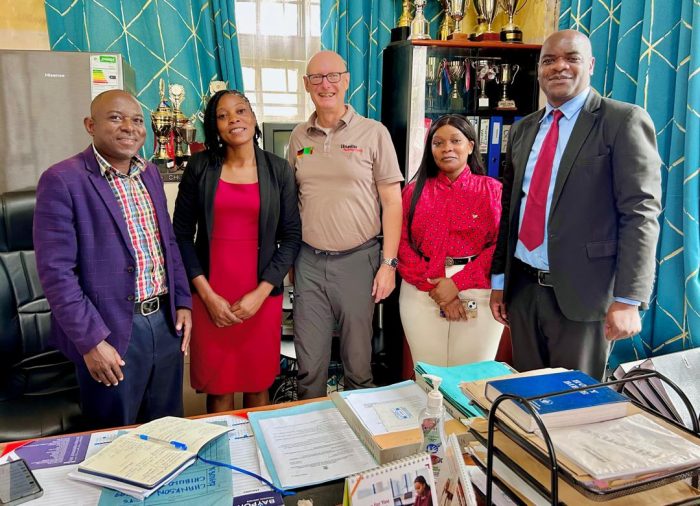
Dennis Hamenja DEBS on the Left -Ubunthu team in the middle and on the Right is Education Standards Officer Mr Simatama
What began as a promising pilot has now moved into full implementation.
Following a successful one-year trial of the School Garden Project, Ubunthu Enablers Organization has officially entered the implementation phase of its Climate-Smart Agriculture initiative in Choma District marking a key milestone in advancing sustainable, education-driven agriculture.
This progress has been formalized through the signing of a Memorandum of Understanding (MoU) under a Public-Private Partnership (PPP) framework between Ubunthu Enablers Organization and the Choma District Education Board Secretary’s office.
The agreement was signed by District Education Board Secretary(DEBS) Hameja Denis and Education Standards Officer (ESO) Simatama Simatama, reflecting a shared commitment to integrating practical agricultural skills into the education system.
After a thorough selection process, four schools have been chosen to participate in the first phase of the Climate-Smart Agriculture (Farming as a Business) Project:
• Maanda Secondary School
• Chilalantambo Secondary
• Singani East Secondary
• Sichidinta School
These schools will act as implementation hubs, demonstrating how climate-smart agriculture can be embedded within school environments to support both learning and community resilience.
With the project now in the implementation stage, attention turns to capacity building. Lead teachers from the selected schools will undergo specialized training in climate-smart agriculture practices aligned with the national education curriculum. This ensures that the initiative becomes part of structured learning, combining classroom knowledge with hands-on experience.
By emphasizing “farming as a business,” the project is equipping learners with entrepreneurial skills, sustainability awareness, and practical competencies that prepare them for real-world challenges.
As implementation begins, the vision is clear: to transform schools into centers of innovation, food security, and environmental stewardship.
This is not just an expansion it is a model for how Public-Private Partnerships can drive meaningful change in education and agriculture.